Comparison
Best Cold Wallet for Crypto: Ledger vs Trezor
I often meet people after a frightening wallet prompt, confusing token approval, or exchange scare. The plain risk is this: if someone gets your recovery phrase, tricks you into approving the wrong transaction, or controls the device you use, your funds can move before you have time to react.
In short
- Ledger Nano X fits users who want broad asset coverage, with asset support listed as Thousands of supported coins and tokens and networks listed as Bitcoin, Ethereum, Solana, XRP, stablecoins.
- Trezor Safe 3 fits users who want a recovery design centered on SLIP39 backups and asset coverage listed as 1000s of coins & tokens.
- Ledger Nano X has broader listed platform coverage at Desktop/laptop, Android, iOS, while Trezor Safe 3 lists Android (full compatibility); iOS (limited compatibility).
- The best cold wallet for crypto is the one that supports your actual assets, your daily devices, and a recovery plan you can follow under stress.
- A hardware wallet cannot protect you from every bad approval, so the screen check before signing is part of the wallet, not an optional habit.
Key facts
| Ledger Nano X | Trezor Safe 3 | |
|---|---|---|
| Supported coins & networks | Supported networks: Bitcoin, Ethereum, Solana, XRP, stablecoins Number of supported assets: Thousands of supported coins and tokens | Number of supported assets: 1000s of coins & tokens |
| Devices & platforms | Platforms: Desktop/laptop, Android, iOS | Platforms: Android (full compatibility); iOS (limited compatibility) |
| Price | — | — |
| Who controls the keys | — | Key custody: SLIP39 backups |
What are the key differences in this hardware wallet comparison?
When I compare cold wallets, I start with failure points, not features. A hardware wallet helps because private keys are created and used inside a separate device, away from the everyday computer or phone where phishing pages, fake popups, and copied addresses usually appear. That gives you a safer place to make decisions, but it does not remove risk.
For this hardware wallet comparison, I would frame the choice this way:
- Ledger Nano X is the better fit if you want broad coverage across common networks and desktop, laptop, Android, and iOS options. Its supported assets are listed as Thousands of supported coins and tokens, and its supported networks are listed as Bitcoin, Ethereum, Solana, XRP, stablecoins.
- Trezor Safe 3 is the better fit if you value a recovery model built around SLIP39 backups and you are comfortable checking compatibility before you commit funds. Its asset support is listed as 1000s of coins & tokens.
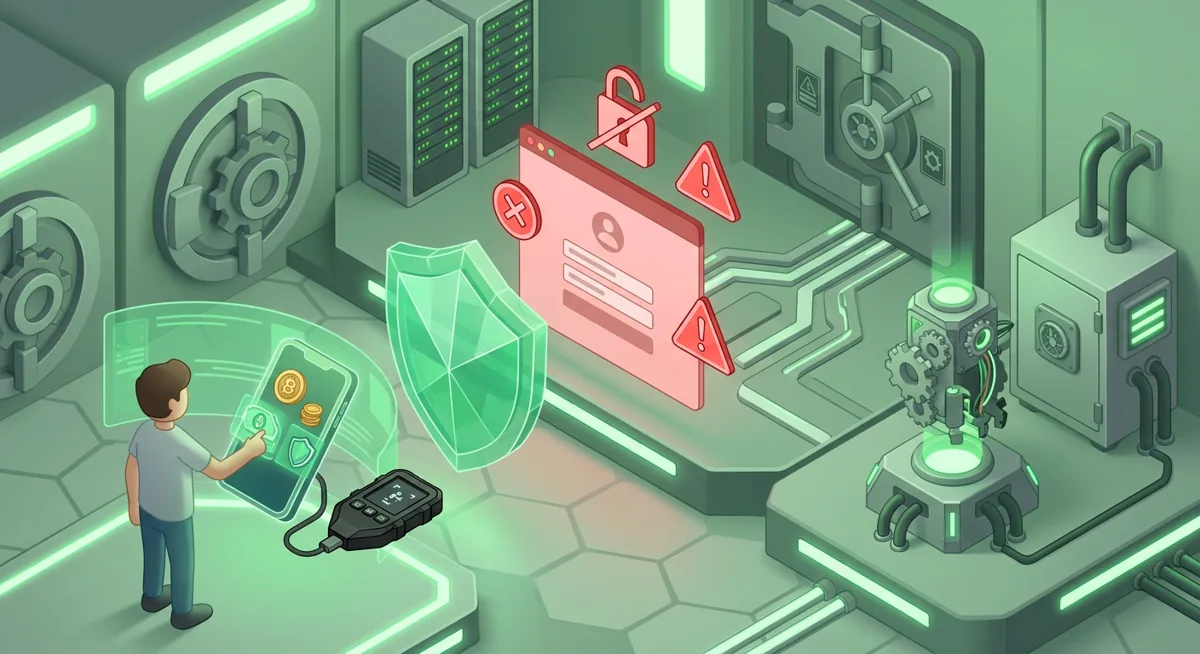
- Neither wallet removes human judgment. If a fake site asks you to approve a token allowance, the hardware wallet can still show a request, and you still have to reject it.
- The best cold wallet for crypto is personal. I care less about brand loyalty and more about whether the device supports your coins, works with your phone or computer, and gives you a recovery path you can protect.
Warning: never type your recovery phrase into a website, support chat, form, or phone app. If a site asks for the list of words, assume the wallet is exposed and stop.
If you are still learning the basics, pair this comparison with Hardware wallets: safer self-custody basics and Wallet Basics for Safer Crypto Storage.
Which networks and assets are supported side by side?
Asset support is where many people make expensive assumptions. I have seen users buy a device, set it up correctly, then discover that the token they care about needs a particular network path or wallet interface.
Here is the simple side-by-side view:
- Ledger Nano X: supported networks are listed as Bitcoin, Ethereum, Solana, XRP, stablecoins, and the number of supported assets is listed as Thousands of supported coins and tokens.
- Trezor Safe 3: the number of supported assets is listed as 1000s of coins & tokens.
The difference is not only the headline asset count. What matters is whether your exact coin or token, on the exact network you use, can be received, viewed, and later sent without a workaround you do not understand.
How I check asset fit before trusting a cold wallet
Step one: list the assets you actually hold, not the assets you might buy later.
Step two: write down the network used for each asset. A token name can appear on more than one network, and sending on the wrong network can create a recovery problem.
Step three: confirm support on the official Ledger or Trezor website by name. I avoid search ads and social posts for this task because scammers copy brand language closely.
Step four: after setup, receive a small test amount first. Prove you control the address and can see the balance where you expect it.
Step five: before sending the rest, compare the address on the hardware wallet screen, not only on the computer or phone.
For deeper planning, use Key management checklist for safer self-custody.
Which platforms work with Ledger Nano X and Trezor Safe 3?
Platform support matters because the safest wallet is not helpful if you bypass it out of frustration. I want the wallet to fit the device you use on calm days, so you do not improvise on stressful days.
The listed platform support is:
- Ledger Nano X: Desktop/laptop, Android, iOS.
- Trezor Safe 3: Android (full compatibility); iOS (limited compatibility).
If you live mostly on an iPhone, that difference deserves attention. If you use an Android phone or a desktop computer for wallet management, your decision may feel different. I do not treat mobile access as automatically safer or less safe. I treat it as a workflow question: can you clearly read prompts, verify addresses, and pause before signing?
My platform safety routine
Step one: use a clean, trusted device for setup. If your computer is filled with popups, browser extensions you do not remember installing, or strange redirects, fix that first.
Step two: remove unnecessary browser extensions before connecting any wallet. Extensions can change what you see in the browser, and that is where approval tricks often appear.
Step three: keep wallet activity separate from casual browsing. I prefer a dedicated browser profile for crypto activity so shopping, games, and messages are not mixed with signing.
Step four: check the address on the hardware wallet display. If the computer says one thing and the device says another, trust the dedicated device and stop.
Step five: treat every unexpected signature request as suspicious. If you were only trying to view a balance and the wallet asks to approve spending, that is a red flag.
If your computer already feels questionable, work through Crypto Home Security Checklist: Virus Checker Basics before you connect a wallet.
Which cold wallet fits which user?
I usually avoid declaring one winner for everyone. The better question is: which wallet reduces your most likely mistake?
Choose Ledger Nano X if...
- You want broad asset and network coverage, with supported networks listed as Bitcoin, Ethereum, Solana, XRP, stablecoins.
- You expect to manage funds across desktop or mobile devices, with platform support listed as Desktop/laptop, Android, iOS.
- You want a device that fits a portfolio spread across several major ecosystems.
- You are willing to slow down and verify every approval on the device screen.
Ledger Nano X can be a strong fit for users who move between phone and computer. The risk I would watch for is convenience becoming automatic approval. If you sign quickly because the device is familiar, you lose the main benefit: a trusted pause before funds move.
Choose Trezor Safe 3 if...
- You want a recovery approach that includes SLIP39 backups.
- Your assets fit its listed coverage of 1000s of coins & tokens.
- Android compatibility matters more to you than full iOS compatibility, based on Android (full compatibility); iOS (limited compatibility).
- You prefer a workflow where recovery planning is central from the start.
Trezor Safe 3 can be a strong fit for users who want to think carefully about backup structure. The risk I would watch for is misunderstanding recovery. A recovery plan that is too clever, hidden too well, or split among people who do not know what to do can fail when your family needs it.
Cold wallet pros cons in plain language
Pros: a cold wallet keeps signing separate from everyday browsing, makes approvals more visible, and gives you a structured recovery process. It also helps you slow down, which is underrated security.
Cons: if you lose the recovery phrase and the device fails, access can be lost. If someone sees or copies the recovery phrase, they may not need the device. If you approve a malicious transaction, the hardware wallet may faithfully sign the thing you asked it to sign.
My first setup checklist
Step one: buy through the official brand store or an authorized channel you can verify.
Step two: set up the wallet in a private place, away from cameras, shared screens, and helpful strangers.
Step three: let the device create the recovery phrase. Do not accept a device that arrives with a phrase already prepared.
Step four: write the recovery phrase offline and store it where fire, theft, and casual discovery are all considered.
Step five: send a small test amount, then practice locating your recovery instructions without exposing the phrase.
Step six: document what your trusted person should do if you are unavailable, but do not hand them the phrase casually.
For broader planning, read Self-Custody and Hardware Wallets for Safer Storage and Cold Storage Best Practices for Safer Recovery. The best cold wallet for crypto is not only a device; it is the device plus the habits around it.
Questions and answers
- What is the best cold wallet for crypto for most people?
I would choose based on assets, platforms, and recovery comfort. Ledger Nano X is strong for broad listed network and platform coverage, while Trezor Safe 3 stands out if its recovery approach and compatibility fit your routine.
- Does a hardware wallet protect me if I approve a bad transaction?
No. A hardware wallet can help keep keys isolated, but it can still sign a harmful approval if you confirm it. I treat every approval as a security decision, especially token spending permissions and unfamiliar contract prompts.
- Should I store my recovery phrase in a password manager or photo app?
I would not. Digital copies can sync, be exposed through account compromise, or appear on devices you forgot about. I prefer offline storage with a clear recovery plan.
- What should I do if my recovery phrase may be exposed?
Assume the wallet is no longer private. Use a trusted device, create a fresh wallet with a new recovery phrase, test the new address, and move funds carefully. For a calm response plan, use Lost Seed or Exposed Keys: Cold Wallet Crypto Checklist.
- Is Ledger Nano X better than Trezor Safe 3 for mobile use?
It depends on your phone and workflow. Ledger Nano X lists Desktop/laptop, Android, iOS, while Trezor Safe 3 lists Android (full compatibility); iOS (limited compatibility). I would choose the one that lets you verify prompts clearly without rushing.