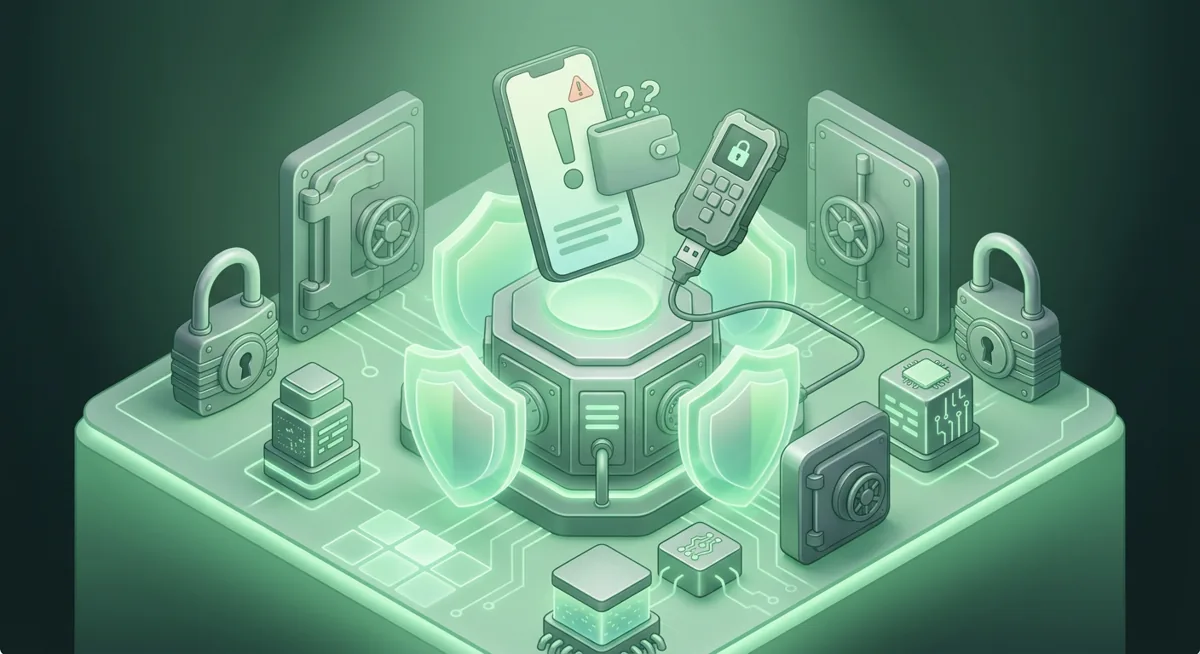
Security checklist
Hardware Security Key Checklist for Wallet Safety
You plug in your hardware wallet to send crypto, and a strange prompt appears: update firmware, approve a transaction, reconnect the device. I have seen that moment turn into panic for people who were tired, rushed, or recovering from a phishing scare, so I start with the plain risk: if your recovery phrase or signing approval is exposed, the device itself cannot save the funds.
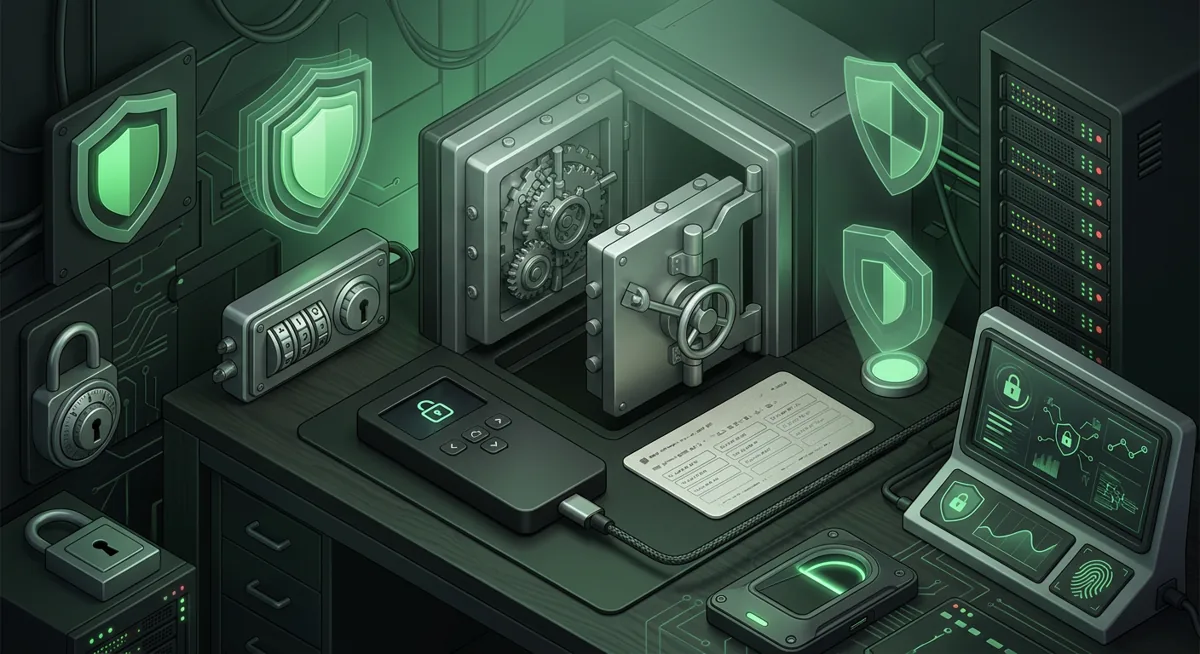
What should I check before trusting a hardware wallet?
Use this checklist for a Ledger Nano X, a Trezor Safe Three, or any cold wallet crypto setup. I treat a hardware wallet like a hardware security key for money: it is only useful when the device, the screen, the computer, and the human decision all work together.
Buying and receiving the device
- Buy from the official maker or a source you can clearly verify.
- Reject any device that arrives with a recovery phrase already written down, printed, scratched onto a card, or shown in an app.
- Inspect the box and device for device tamper signs: broken seals, unusual glue, mismatched packaging, scratches around the port, or accessories that look swapped.
- If anything feels wrong, stop. Do not initialize it. Contact the maker through its official website by name only.
First setup
- Set up the device in a quiet place, not while screen sharing, commuting, or talking to someone who is rushing you.
- Let the wallet generate the recovery phrase on the device screen.
- Write the recovery phrase offline on durable material. Do not photograph it, scan it, email it, type it into notes, or store it in cloud storage.
- Create a strong PIN or passcode if the device supports one.
- If you choose an optional passphrase feature, treat it as part of the wallet access method. If you forget it, the recovery phrase alone may not restore the same accounts.
Warning: A recovery phrase typed into a website, support chat, form, browser extension, or phone app can lead to permanent loss of funds. Real support does not need that list of words to help you.
Firmware update checklist
- Start updates only from the official wallet software or official website by name, not from pop-ups, ads, social messages, or urgent emails.
- Read the device screen, not just the computer screen. The device screen is your trusted checkpoint.
- Confirm that the device remains the same wallet after the update by checking account addresses before moving funds.
- Never enter your recovery phrase just because an update asks for it. A legitimate firmware flow may require you to have the phrase available for recovery planning, but it should not ask you to type it into a computer.
- If an update fails, pause before trying again. Rushed repeat attempts are where people accept the wrong prompt.
Daily transaction checks
- Use the hardware wallet screen to verify the recipient address and asset before approving.
- For a new address, send a small test transaction when fees and urgency make that practical.
- Watch for address replacement: malware can swap an address after you copy it.
- Be careful with token approvals, blind signing, and contract interactions. If the device cannot show you what you are approving in plain terms, treat the action as higher risk.
- Separate long-term storage from experimenting. I prefer a cold wallet crypto account for savings and a smaller hot wallet for new apps.
Storage and recovery readiness
- Store the recovery phrase where fire, water, theft, and casual discovery are all considered.
- Do not keep the device and the recovery phrase in the same bag, drawer, or travel case.
- Tell a trusted executor how to find your instructions without giving them immediate access to the funds.
- Test your recovery plan with an empty or low-value wallet before you need it under stress.
- If you suspect exposure, move funds to a newly generated wallet from a clean setup. Changing the PIN does not fix a leaked recovery phrase.
Service-specific reminders
- Ledger Nano X users should install and manage assets through the official Ledger Wallet app. Ledger Nano X supports (being re-verified), but more supported assets also means more chances to approve something you did not mean to approve.
- Trezor Safe Three users should rely on the device screen and official Trezor software for setup, recovery, and firmware prompts.
- For both devices, the safest habit is the same: the recovery phrase belongs only on paper or another offline backup, never inside a connected device.
Why does each part of the checklist matter?
Why buying source matters
A hardware wallet is meant to keep private keys away from your everyday computer. That protection is weakened if the device was altered before it reached you or if the setup process was staged by someone else. The biggest red flag is simple: if a recovery phrase is provided to you instead of generated on the device, assume someone else can access the wallet.
I have helped people who thought the packaging looked normal and only later noticed the included card was already filled out. In that situation, the attacker does not need your laptop. They only wait for you to deposit funds into a wallet they can already restore.
Why setup privacy matters
During setup, you are creating the root secret for the wallet. The phrase is not just a password. It is the recovery path to the private keys. If a camera sees it, if a clipboard app stores it, or if a cloud backup syncs it, the wallet can be drained without the physical device.
This is why I slow people down. If you are setting up after a scare, your instinct may be to rush into a new ledger cold wallet or Trezor setup. Instead, close extra apps, put away the phone camera, and make the room boring. Boring is good security.
Why firmware checks matter
Firmware controls how the hardware wallet signs and displays requests. Updates can improve security, but fake update prompts are common in phishing flows. The safe pattern is to start from official software, verify on the device screen, and refuse any request that moves the recovery phrase onto a computer or phone.
Here is the what-if scenario I want you to remember: if a browser page says your wallet is locked and asks for the recovery phrase, that is not recovery. That is surrendering the wallet. If the real device needs recovery, the process should be centered on the device and the official wallet flow, not a random page.
Why transaction review matters
A hardware wallet does not know your intention. It signs what you approve. If your computer is compromised, the computer may show a friendly address while the device shows a different one. That is why the device screen matters.
For simple transfers, compare the visible details. For smart contracts, slow down even more. A prompt that looks like a harmless login may actually grant spending permission. If the wallet shows limited detail, I assume higher risk and use a smaller wallet until I understand the action.
Why storage planning matters
The recovery phrase is both your backup and your greatest liability. If the device breaks, the phrase restores access. If someone else finds it, they may restore access too. Good storage is not just hiding it; it is planning for accidents, travel, illness, and family emergencies.
A common mistake is keeping the phrase near the wallet because it feels organized. That creates a single point of failure. If a thief, guest, or disaster reaches that spot, both protections are gone. Separate them, and make your instructions clear enough that your future self can follow them under stress.
What if something already feels wrong?
If you entered your recovery phrase into anything connected to the internet, treat the wallet as exposed. If you approved a suspicious transaction, review permissions and move remaining funds to a new wallet where possible. If the device packaging looked altered before setup, do not use it for funds. In each case, the protective move is the same: stop interacting with the questionable setup and rebuild from a clean, verified path.
Questions and answers
- Is a hardware security key the same as a hardware wallet?
Not exactly. A hardware security key usually protects account logins, while a hardware wallet protects crypto private keys and signs transactions. The security mindset is similar: keep secrets off everyday devices and verify actions before approval.
- Should I update hardware wallet firmware right away?
I update only through the official wallet software or official website by name, and I read the device screen before approving. I do not follow urgent email prompts, ads, or messages that ask for the recovery phrase.
- What should I do if my recovery phrase was photographed?
Assume it may be exposed. Create a new wallet from a clean setup, confirm the new recovery phrase is stored offline, and move funds away from the old wallet as soon as safely possible.
- Can I keep using a hardware wallet after a suspicious approval?
The device may still be fine, but the affected account or token permission may not be. I would stop, review what was approved, revoke risky permissions where possible, and consider moving funds to a new wallet.