Security checklist
Fingerprint Safe for Seed Phrase Storage: Security Checklist
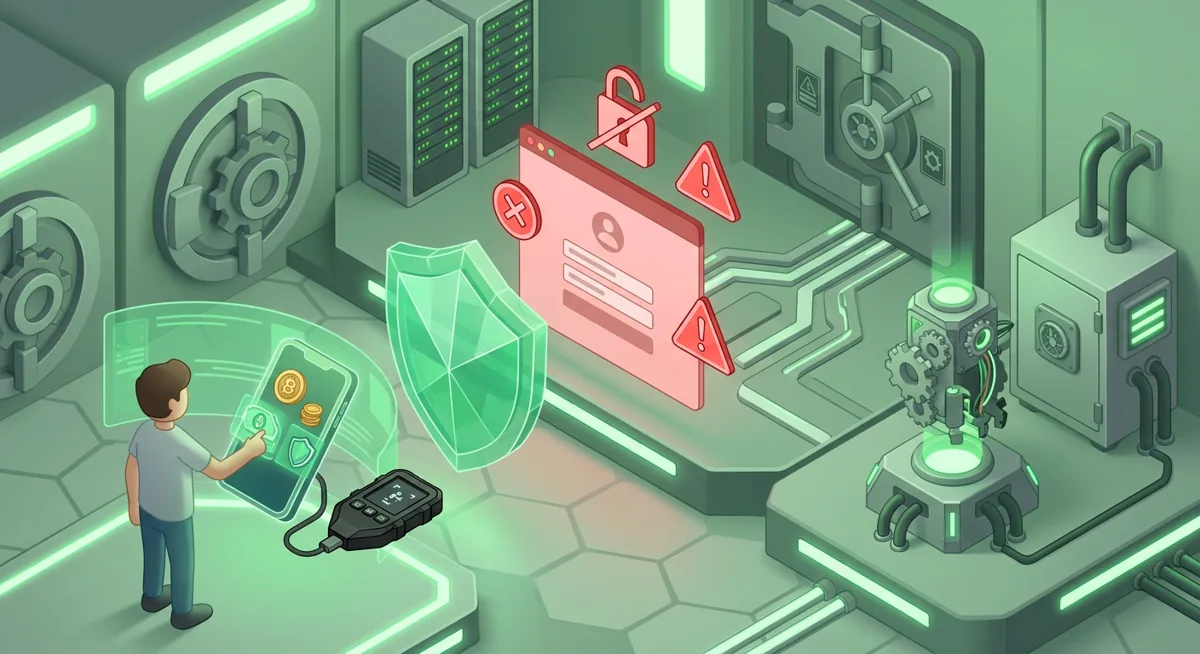
You set up a Ledger Nano X, Trezor Safe 3, or Tangem, write down the recovery material, and then pause at the question I hear after stressful wallet incidents: where can this live without making everything worse? A fingerprint safe can help, but it should be one protective layer, not the whole plan.
In short
- A fingerprint safe can help with physical storage seed phrase protection, but it should not be the only barrier protecting recovery material.
- Do not store a recovery phrase, hardware wallet, passphrase, and safe override key together, because one discovery could expose everything.
- A biometric safe crypto seed setup should include fire, water, tamper, inheritance, and access-failure planning.
- For Ledger Nano X, Trezor Safe 3, and Tangem users, the recovery material is more sensitive than the device itself.
- A bank deposit box can reduce home theft risk, but it may create access delays and inheritance complications.
What should I check before using a fingerprint safe?
Start with the risk in plain words: anyone who gets your recovery material may be able to restore the wallet without your device. A fingerprint safe may slow down a roommate, contractor, visitor, or burglar, but it does not erase the consequences of poor storage choices.
Use this checklist before you put a list of words, metal backup, or other recovery material inside a fingerprint safe.
Step one: separate the things that unlock the wallet
- Keep the recovery material separate from the hardware wallet whenever practical.
- Keep any optional passphrase separate from the recovery material.
- Keep the safe override key somewhere different from the safe itself.
- Do not put setup notes, PIN hints, exchange passwords, or account recovery details in the same pouch.
If someone finds a Ledger Nano X and its recovery material together, the device’s normal protection matters much less. Ledger Nano X supports Thousands of supported coins and tokens and networks including Bitcoin, Ethereum, Solana, XRP, stablecoins, so one exposed backup can matter across many assets. The same idea applies to Trezor Safe 3, which supports 1000s of coins & tokens, and to Tangem: the backup material is the crown jewel.
Mistake that can lose funds: do not store the recovery phrase and the passphrase together because it turns a layered setup into one target.
Step two: treat biometrics as convenience, not proof of ownership
- Choose a fingerprint safe with a strong non-biometric opening method, such as a keypad or physical override system.
- Test access when your finger is dry, cold, slightly dirty, or bandaged.
- Decide who can open it if you are unavailable.
- Avoid storing the only override key inside the safe.
A fingerprint reader can fail after a hand injury, during a move, after battery problems, or when a trusted person needs to act for you. I like biometrics for reducing casual access, but I do not want a wallet recovery plan to depend on one sensor reading one person’s finger.
Step three: check fire, water, and placement risks
- Prefer a safe or storage container designed for fire and water resistance, but read its limitations before trusting it.
- Do not place the safe in an obvious bedroom drawer or office cabinet.
- Avoid damp basements, hot attics, and places that flood first.
- Use recovery material that will survive the environment you choose.
A fireproof waterproof safe crypto setup still needs judgment. A small safe that is easy to carry away may protect against a spill but fail against a hurried theft.
Step four: add tamper awareness
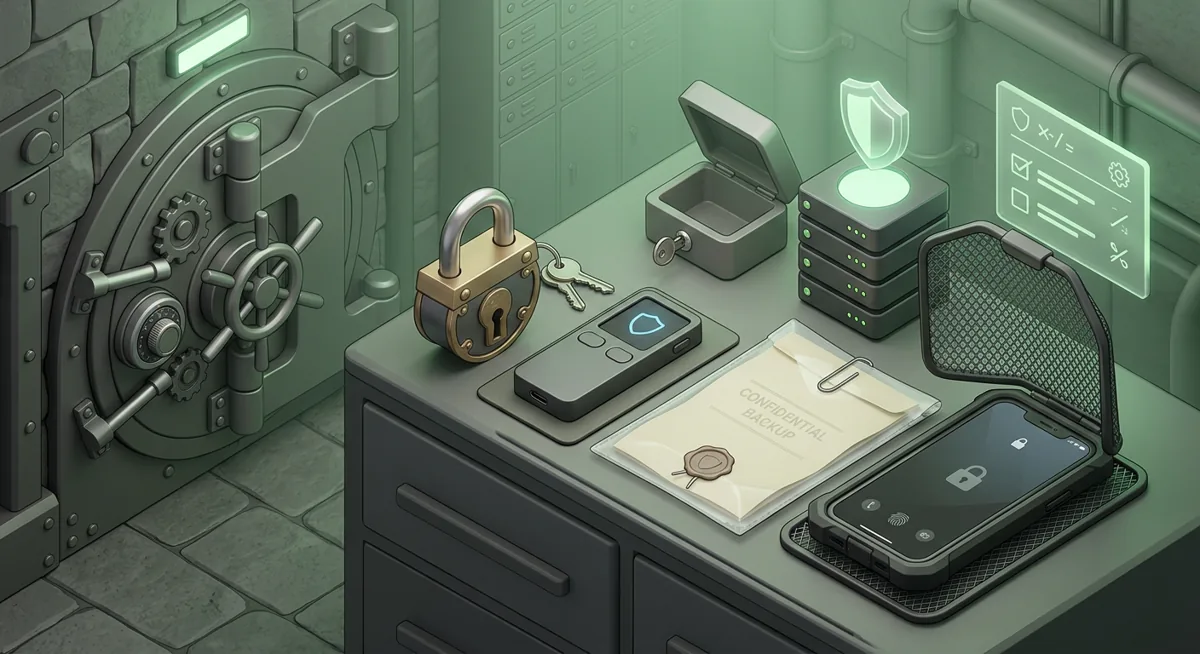
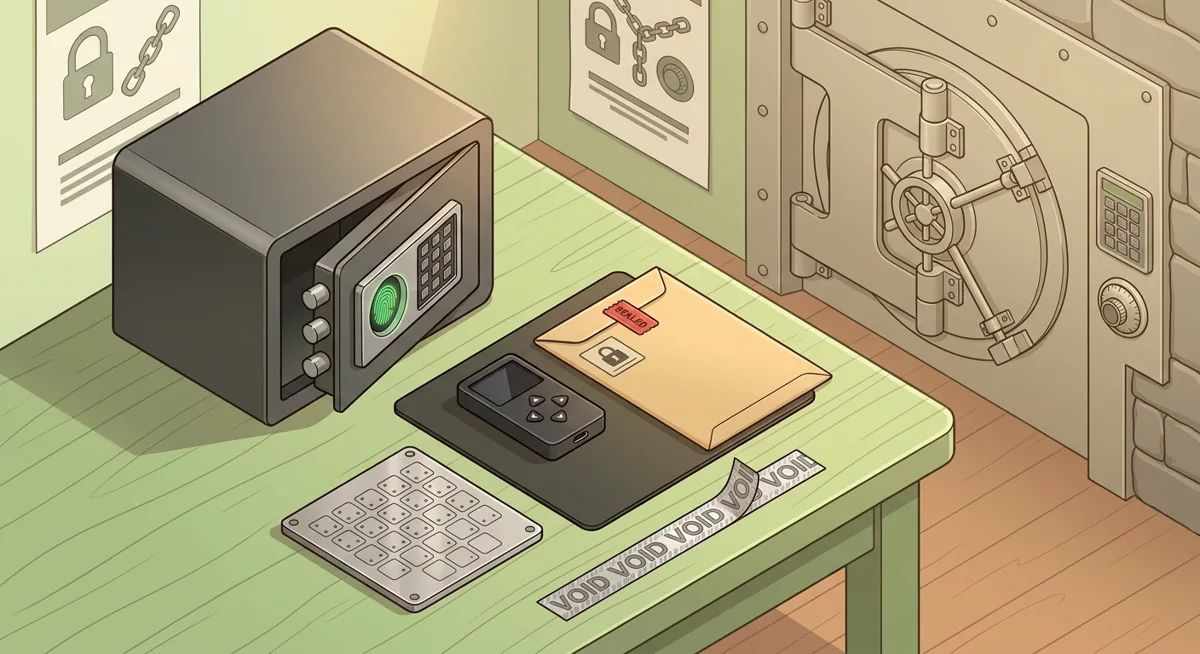
- Use a sealed envelope, tamper-evident bag, or other visible disturbance indicator around the recovery material.
- Photograph the sealed package for your own records without capturing the words.
- Check the seal on a regular household schedule, such as when you test smoke alarms.
- If the seal looks disturbed, move funds to a new wallet setup using a clean recovery process.
Tamper-evident storage crypto practices do not stop access by themselves. Their value is alerting you that access may have happened.
Step five: plan for bank deposit box tradeoffs
- Use a bank deposit box only if delayed access would not trap your family or executor.
- Do not store the only copy in a location that may be inaccessible during travel, holidays, disputes, or paperwork problems.
- Consider splitting roles: one location holds recovery material, another holds instructions that explain what it is without exposing it.
- Make inheritance instructions clear enough for a trusted person to follow, but not so detailed that a stranger can take over.
Safe vs bank deposit box for seed storage is not a simple contest. A home safe gives faster access and easier inspection. A bank deposit box may reduce ordinary home theft risk, but crypto recovery often happens during stress.
Step six: match the plan to your wallet type
- For Ledger Nano X, keep recovery material away from the device and use official Ledger software only by name and source.
- For Trezor Safe 3, understand your backup style before storing it; its key custody fact includes SLIP39 backups.
- For Tangem, store any backup or access materials according to the official setup flow, not screenshots or casual notes.
- Record which wallet brand the material belongs to without writing the recovery words in your inventory.
Ledger Nano X works across Desktop/laptop, Android, iOS, while Trezor Safe 3 platform support is Android (full compatibility); iOS (limited compatibility). That matters for recovery planning because your future self may use a different device than today. A short inventory note can identify the sealed backup without exposing the recovery material itself.
Why do these fingerprint safe checks matter?
A safe can become a single point of failure
When I help people after a wallet-drainer incident or phishing loss, the painful pattern is often simple: the victim tried to be organized, but placed too many secrets together. A fingerprint safe can make that mistake feel more secure because the container looks serious.
If the safe contains the recovery material, hardware wallet, passphrase, exchange backup codes, and override key, then the safe is no longer just storage. It is the whole account.
Biometrics solve access friction, not recovery design
A fingerprint safe is useful when you want quick access without leaving keys in a drawer. But recovery phrase storage has a different goal: controlled access over a long time, through emergencies, device loss, illness, and family transitions.
That is why I prefer layered plans. The biometric safe slows casual access. The separated passphrase limits what exposed recovery material can do. Tamper evidence tells you when to rotate. Clear inheritance notes prevent a trusted person from throwing away something important because it looked like scrap paper.
Fire and water protection should match the material
Paper, metal, ink, envelopes, adhesives, and safes all behave differently under heat, moisture, and time. A safe may be advertised for household documents, but your crypto recovery material is small, portable, and sensitive if copied.
Think through ordinary scenarios. A pipe bursts while you are away. A relative cleans a room and moves the safe. A contractor sees it during renovation. None of these require technical skill.
Home safe or bank box depends on your threat model
If your main concern is a break-in, a bank deposit box may be attractive. If your main concern is emergency recovery, home access may matter more. If your family would not know what to ask for at a bank, the box may be secure but useless.
The better answer is usually not one perfect location. It is a plan where no single casual discovery exposes the wallet, and no single lost key destroys the recovery path.
What I would do before closing the safe
- I would read the recovery material once in private to confirm it is legible, without making a photo or cloud copy.
- I would seal it so later tampering is visible.
- I would store any optional passphrase somewhere else.
- I would document the existence of the backup for a trusted person without revealing the words.
- I would rehearse the recovery path mentally: if the device is lost, if the safe battery fails, if I am unavailable, and if the seal is disturbed.
A fingerprint safe for seed phrase storage can be part of best practices recovery phrase storage, but it is not a substitute for separation, discretion, and recovery planning. I want you to be able to regain access when you truly need it, while making it hard for anyone else to turn one lucky find into a loss.
Questions and answers
- Is a fingerprint safe secure enough for a seed phrase?
It can be secure enough as one layer, but I would not rely on it alone. Use separation, tamper evidence, environmental protection, and a plan for access if the biometric reader fails.
- Should I put my hardware wallet in the same safe as the recovery phrase?
I prefer not to. Keeping the device and recovery material apart reduces the chance that one discovery gives someone everything needed to restore or move funds.
- Is a bank deposit box better than a home fingerprint safe?
It depends on the problem you are solving. A bank deposit box may reduce home theft exposure, while a home safe may help with urgent access.
- Can I store my passphrase with my recovery phrase if both are sealed?
I would not. A seal may tell you later that someone opened the package, but it does not prevent copying.
- What should I do if the safe seal looks disturbed?
Treat the recovery material as potentially exposed. Use a clean device and official wallet process to move funds to a new wallet setup, then retire the old recovery material.