Security checklist
Secure Backup Strategies for Crypto Wallets
You open a drawer for your wallet recovery backup and find a faded paper note beside old receipts, or worse, you remember saving it on your laptop for convenience. That small shortcut can become the moment a thief, house fire, or device infection turns into permanent loss.

In short
- A password safe is useful for account passwords, but I do not use it as the only home for a wallet recovery phrase.
- A metal seed backup protects better than paper against water, heat, fading, and accidental cleaning.
- My rule is simple: do not store seed in word document files, photos, cloud notes, email drafts, or chat messages.
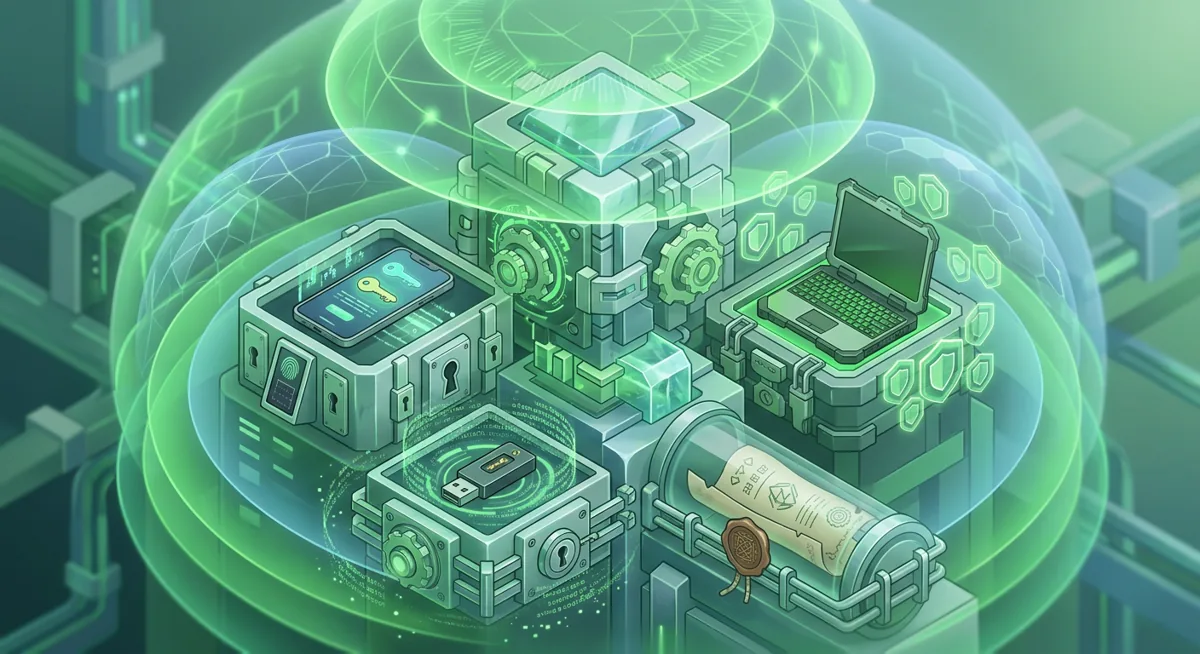
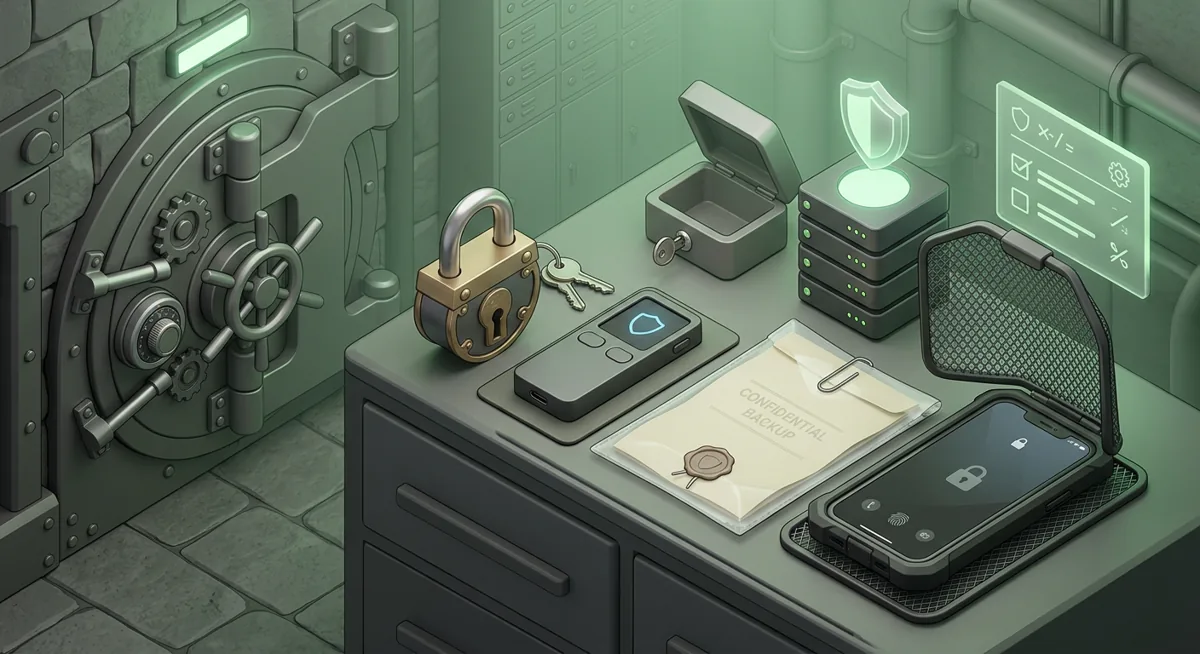
- A physical backup checklist should cover secrecy, durability, location, access control, and recovery testing without exposing the words.
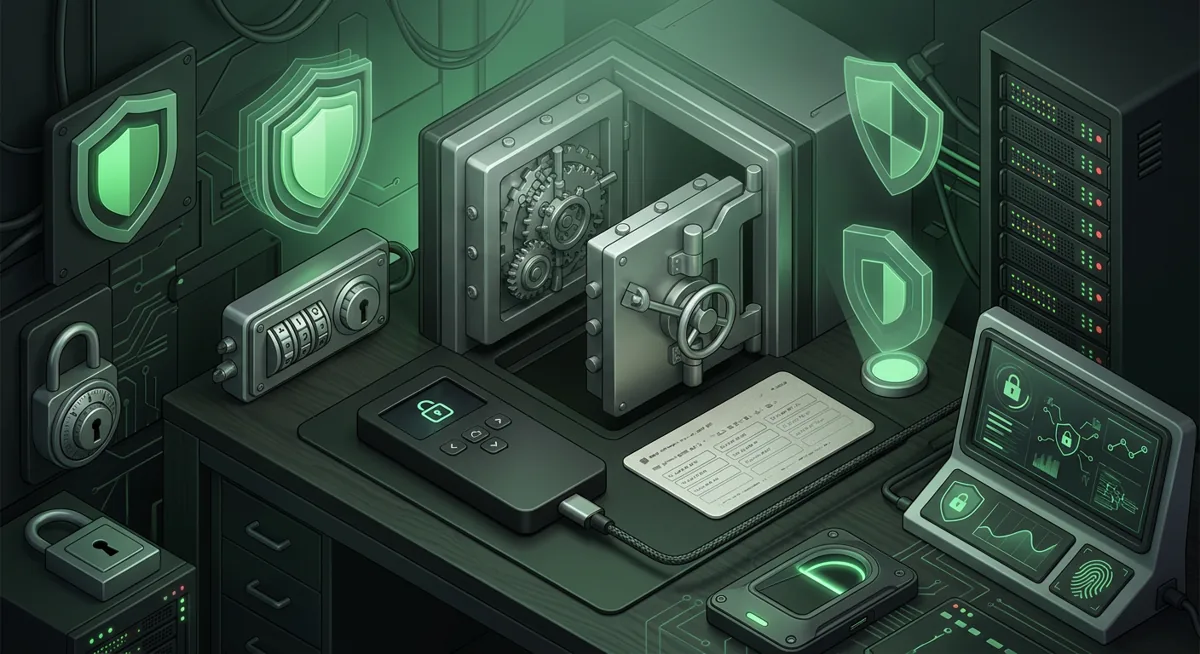
- A home safe, an AMSEC safe, or a biometric handgun safe can help, but placement and who can open it matter as much as the safe itself.
What should be in my physical backup checklist?
The plain risk is this: whoever can read your wallet recovery phrase can move the funds, and if you lose every readable copy, you may not be able to recover the wallet. I treat the backup as both a secret and an emergency tool.
For broader wallet setup context, I would pair this checklist with the Setup and Recovery Guides for Safer Wallet Use and the Self-Custody and Hardware Wallets for Safer Storage.
Step one: separate passwords from recovery phrases
- Use a reputable password safe for exchange logins, email passwords, wallet app passwords, and security key recovery notes.
- Do not put the wallet recovery phrase itself in the password safe unless you have made a deliberate threat model and understand that one unlocked vault could expose everything.
- Keep device unlock codes, email access, and exchange credentials distinct from the physical recovery backup.
- If you use custodial accounts, protect the email account tied to them as carefully as the account itself.
Step two: remove digital copies
- My default rule is: do not store seed in word document files.
- Do not keep the phrase in screenshots, camera rolls, cloud notes, email drafts, printer queues, chat apps, or shared drives.
- Do not type the phrase into a work computer, borrowed device, or browser form.
- If you once created a digital copy, assume it may still exist in backups, sync history, or thumbnails, and move funds to a newly created wallet after securing a fresh recovery backup.
Warning: a neat document on a laptop feels organized, but it can be copied silently by malware, cloud sync, repair access, or someone borrowing the device. Convenience can cost the wallet.
Step three: choose durable physical media
- Write the phrase clearly on paper only as a temporary setup step, then create a more durable backup.
- Use a metal seed backup when you want better resistance to water, heat, fading, insects, and accidental spills.
- Check every character or word position against the wallet screen during setup, without reading the phrase aloud near cameras or smart speakers.
- Avoid decorative storage that draws attention, such as a framed note, labeled envelope, or obvious crypto box.
Step four: choose a safe location with real-world risks in mind
- A home safe can help against casual discovery, cleaners, visitors, and rushed theft.
- An AMSEC safe or another quality safe may be part of a layered plan, especially if it is heavy, concealed, and anchored where possible.
- A biometric handgun safe may be convenient, but I would not rely only on biometrics for critical wallet recovery access; batteries, sensor errors, and shared fingerprints can create problems.
- Do not store the hardware wallet, recovery backup, and written passphrase in one obvious bundle.
- Think through fire, flood, eviction, burglary, family access, and your own ability to find the backup under stress.
Step five: control who can access it
- Decide who should know the backup exists and who should know where it is.
- Leave clear emergency instructions for trusted heirs without revealing the recovery phrase in the instruction note.
- If you use a passphrase feature, store the passphrase separately from the recovery phrase and explain that both may be needed.
- Avoid telling casual friends, online communities, or support impersonators that you have a large self-custody balance.
Step six: test recovery safely
- Confirm that the backup is readable before funding the wallet heavily.
- Use the wallet maker’s official recovery check feature if available, or a clean spare hardware wallet from the official source.
- Never enter the recovery phrase into a website, support chat, online form, or random app.
- After testing, return the backup to storage immediately; many losses happen when someone leaves it on a desk after setup.
Step seven: review your setup after life changes
- Recheck the backup after a move, renovation, divorce, new roommate, travel, or device replacement.
- Update your password safe entries when emails, exchanges, or wallet app passwords change.
- If anyone untrusted may have seen the phrase, create a new wallet and move funds after confirming the new backup.
- Keep learning through Wallet Basics for Safer Crypto Storage and Hardware Wallet and Device Security Overview.
Why does each backup choice matter?
Why I separate the password safe from the recovery phrase
A password safe is excellent for secrets you can rotate, such as account passwords. If an exchange password is exposed, I can change it, review sessions, and add stronger sign-in protection. A wallet recovery phrase is different. If someone copies it, changing a website password does not protect the coins controlled by that phrase. That is why I use the password safe for account hygiene, not as a casual storage place for the phrase.
Why digital storage is the mistake I see most often
When someone tells me they saved the phrase in a document, photo, or cloud note, I worry because digital files spread. A phone may sync photos. A laptop may keep search indexes. A printer may store jobs. A repair shop may access folders. A family member may use the device for a minute. The owner sees one file; an attacker may find many traces.
If you ever typed the phrase into a connected device, I would treat the wallet as exposed. The calm response is not panic; it is containment. Make a new wallet on a trusted device, create a fresh physical backup, test it, then move funds.
Why metal backups are about disasters, not drama
Paper is easy to create and easy to destroy. It fades, tears, soaks, burns, and gets thrown away during cleaning. A metal seed backup is not magic, but it improves survival during ordinary disasters: a leaking roof, a spilled drink, a small fire, or a box stored in a damp garage. The point is to reduce fragile single points of failure.
Why a safe is only part of the plan
A safe protects against some people and some events. It does not help if the combination is taped nearby, if every trusted person forgets it exists, or if all recovery components sit together. A biometric handgun safe may open quickly, which is useful for its intended purpose, but quick access can conflict with long-term secret storage. For crypto backups, I prefer slow, deliberate access over convenience.
Why recovery testing prevents painful surprises
I have seen people protect the wrong paper, misread handwriting, or confuse an old wallet with a new one. A quiet recovery check catches those mistakes before there is an emergency. The test should prove that the backup works without exposing it to the internet. For hardware wallet fundamentals, I would also read Hardware wallets: safer self-custody basics and the Hardware Security Key Checklist for Wallet Safety.
Questions and answers
- Should I keep my recovery phrase in a password safe?
I generally would not keep it there as the only copy. A password safe is useful for exchange passwords, email credentials, and notes about which wallet software you used. A recovery phrase deserves offline physical storage because one unlocked digital vault could expose too much at once.
- Is a metal seed backup better than paper?
Yes, for durability. Paper can be damaged by water, heat, fading, pests, and cleaning mistakes. Metal does not remove every risk, but it gives the backup a better chance of surviving common household disasters.
- Is an AMSEC safe enough for crypto backup storage?
An AMSEC safe can be a strong part of the plan, but no safe fixes poor placement or careless access. I would still conceal it, limit who can open it, and avoid storing every recovery component together.
- Can I store a photo of my recovery phrase temporarily?
I would avoid it. Photos can sync, create thumbnails, appear in backups, or be viewed during device repair. If a photo ever existed, I would consider creating a new wallet with a fresh offline backup.
- What if someone may have seen my recovery phrase?
Treat it as exposed. Create a new wallet, make and test a fresh physical backup, then move funds from the old wallet. Do not argue with yourself about whether the person copied it; act before they can.